
Oscar Wilde Gets a Reception.



Tag: Entertainment
She Whipped the Dude.
Young man who guyed performers in a New Orleans theatre was severely corrected.

Why Wouldn't a "Wild East" Show be Popular, Too?
Here are a few features for it.
Mabel Punched the Swell.
How Miss Livingston, the well-known singer, resented an insult at Macon, Ga.
Done Up by Dizzy Blondes.
A special from Canajoharie, Sept 26, says: Duncan Clark, manager of Clark’s Female Minstrels, will probably not visit the Mohawk valley again very soon.
Chang and Eng, The Siamese Twins.
A characteristic group, representing Chang and Eng, the Siamese Twins, with their wives and Children.
Mdlle. Carlotta de Berg.
Mdlle. Carlotta de Berg, at the New York Circus, Fourteenth Street.
She Had a High Old Time.
Shooting at the Elevated.
After-dinner pistol practice at the trains that rush by windows
Serpent and Dove.
Spectacular Scenes & Sights Down on the Jersey Coast
Poster for the 1898 Broadway show "Have You Seen Smith?"
McGinty Survives!
Trixie Got the Best of It.
Two Little Gem Theatre, Buffalo, N. Y., Soubrettes have a scrap on account of a man.
The Astor Place Riot
Belles of the Bowling Alley.
The athletic diversions of an association of dashing damsels in their club rooms in Chicago.
Duel of the Divas.
The question of who was more beautiful, Lillian Russel or Lola Montez was settled by two cowpokes in the Nevada desert in the 1890s.
A Newspaper Man’s Plight
Denver Col., October 1892 – Correspondent Jake Hirsh cowhided by indignant Lizzie Gonzales, an actress, in Denver.
The Cardiff Giant
Cardiff, New York, October 16, 1869.
Did the Naughty Midway Dance
Pretty Ida Lawrence gets arrested while entertaining some hackmen in Cincinnati, O.
Chorus Girls in a Panic.
An unruly horse causes great excitement in the Metropolitan Opera House, this city.
Crush Collision!
Crush, Texas, September 15, 1896
Strange Company - 9/23/2026
Early American Crime - 2/7/2019

Soapy Smith's Soap Box - 10/13/2025
Murder By Gaslight - 9/19/2026
Executed Today - 11/13/2020

Eaten by Sharks. | What it Has Come To.
Oscar Wilde Gets a Reception.
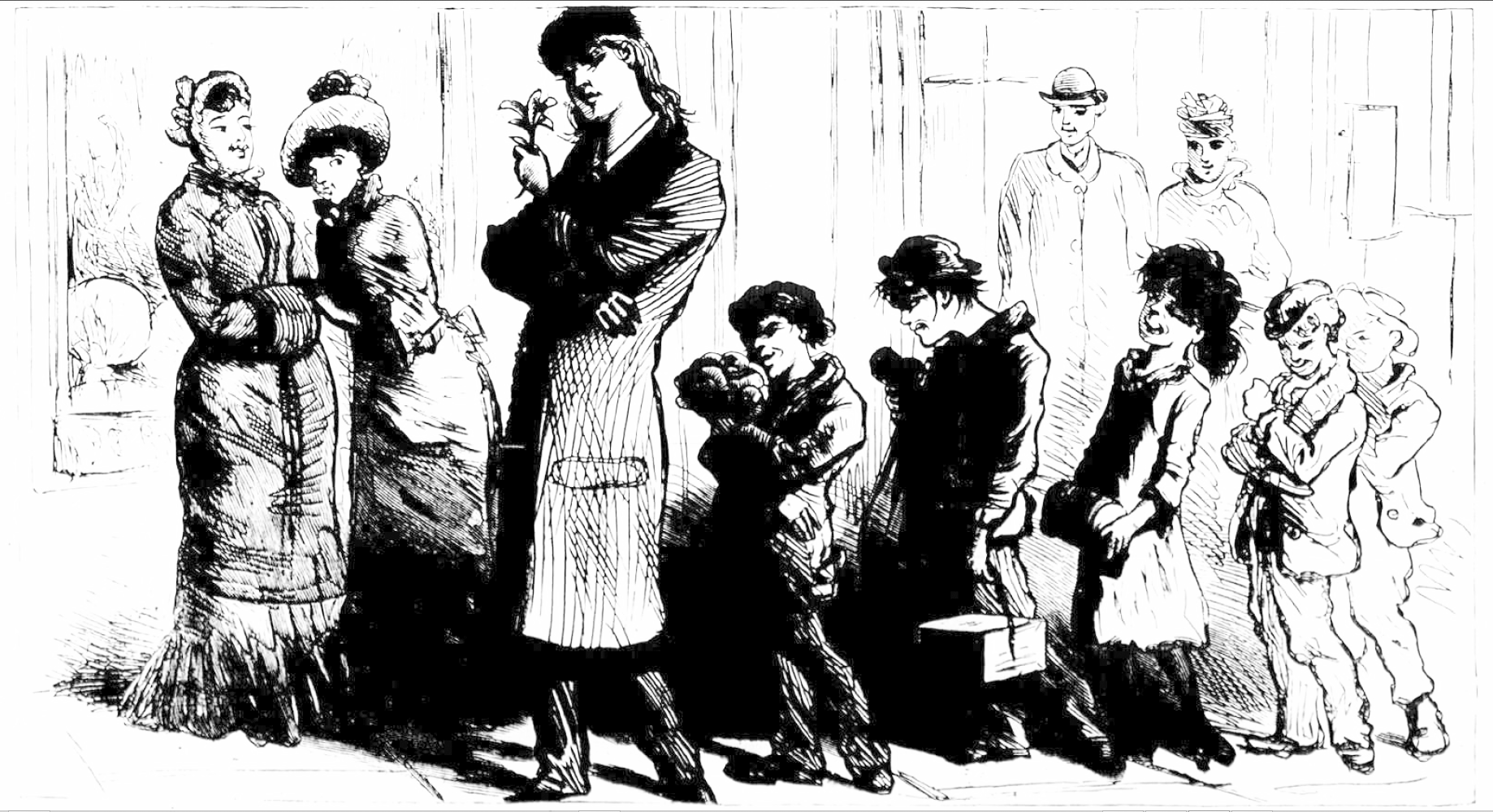
Too, too, utterly utter!
Remarkable effect of the appearance of Oscar Wilde, the apostle of Aestheticism, on the streets of New York City. [more]
The appearance of Oscar Wilde, the great London apostle of Aestheticisim, in New York the first week of the new year was an event that thrilled the first circles and provoked all the wits in town to open their battalions on him. As he stepped nimbly ashore, though, and holding his head high proposed to a friend who had done America before to frown down the hackmen and walk to his hotel, he met quite a different reception from what he had possibly anticipated. With his sprig of fern in hand, his quaint stride, his long locks, his wild eye and his incroyable air generally, he made a genuine sensation on Broadway. The newsboys and bootblacks, that precocious set who hail a novelty with delight, saw in him a fresh guy and made the most of him from the moment he burst in all his aesthetic effulgence upon their astonished vision.
They dubbed him “Count” on the first sight, varying it by occasionally saluting him on his promenade as “Charley, the Masher,” and have even gone so far as to organize a procession in his train, bearing cabbages, onions and garbage from the streets with an air of affectation of aesthetic grace that is laughable from its close imitation of Oscar’s poise of the lily and the fern.
The police will have to furnish a guard to protect him in the streets form the burlesque advances of the fierce and untamed bootblack if he remains among us long, that is a certainty.
Reprinted from National Police Gazette, January 21, 1882.
Welcome to the National Night Stick
"We follow vice and folly where a police officer dare not show his head, as the small, but intrepid weasel pursues vermin in paths which the licensed cat or dog cannot enter."The Sunday Flash 1841

- 1810s
- 1820s
- 1830s
- 1840s
- 1850s
- 1860s
- 1870s
- 1880
- 1880s
- 1890
- 1890s
- Abduction
- Abortion
- Accident
- Actors
- Adultery
- Advertisement
- African Americans
- Alabama
- Alcohol
- Allan Pinkerton
- America
- Animal
- Assault
- Axe Murder
- Bank Robbery
- Barnum
- Baseball
- Beer
- Bet
- Bicycle
- Billiards
- Bio
- Boston
- Boxing
- Boys
- Broadway
- Brooklyn
- Brothel
- Buffalo
- Burglar
- Burglary
- Burlesque
- California
- Canada
- Cartoon
- Censorship
- Chicago
- children
- Chorus Girls
- Christmas
- Cincinnati
- Civil War
- Clergy
- Clubbing
- College
- Colorado
- Comstock
- Con Game
- Connecticut
- Counterfeit
- Court
- Cowboy
- Crime
- cross-dressing
- Crossdressing
- Cursing
- Dancing
- Deception
- Delinquents
- Denver
- Detectives
- Detroit
- Dime Novels
- Disaster
- Disguise
- Disorderly conduct
- Divorce
- Domestic Violence
- Drowning
- Duel
- Editorial
- Election
- Entertainment
- Event
- Fad
- Family
- Fashion
- Fight
- Fire
- Florida
- Food
- Football
- Forger
- Fraud
- Gambling
- Gangs
- Georgia
- Great Detectives
- Gunshot
- Hoax
- Holiday
- Horses
- Hotel
- Illinois
- Indiana
- Insanity
- Jail Break
- Jealousy
- Justice
- Kansas
- Kentucky
- Little Murders
- Louisiana
- Lynching
- Maine
- Marriage
- Maryland
- Massachusetts
- Medicine
- Michigan
- Minnesota
- Missouri
- Montana
- Murder
- Music
- Nevada
- New Hampshire
- New Jersey
- New Orleans
- New Year
- New York
- New York City
- Newsboys
- Newspaper
- Nudity
- Obscenity
- Ohio
- Opium
- Pennsylvania
- Performer
- Petrified man
- Photography
- Pickpocket
- Poisoning
- Police
- Police Gazette
- Politics
- Prank
- Prison
- Prostitution
- Railroad
- Rape
- Rats
- Reform
- Religion
- Reporters
- Revenge
- Rhode Island
- Robbery
- Romance
- Saloon
- San Francisco
- Scandal
- Science
- Seasonal
- Sex
- Slashing
- Society
- Spiritualism
- Sport
- Sports
- Spousal Abuse
- St. Louis
- Stabbing
- Steamboat
- Steamship
- Stock Broker
- Suicide
- Summer
- Tammany Hall
- Temperance
- Tennessee
- Texas
- Theatre
- Theft
- Thomas Byrnes
- Valentine
- Vigilantes
- Voyeur
- War
- Washington D.C.
- Wife beaters
- Winter
- Women