
No. 63
Crime, Eccentricity, and the Sporting Life in 19th Century America.
January 10, 2012

The Sawdust Game

The "sawdust game," was a confidence scam that only swindled those who deserved to be swindled.
January 10, 2012

...
...

Be sure to follow the trial every day on our facebook page. This will be our fourth year showcasing the trial. This year the coverage will be augmented with AI reels and images to help put you on the spot! https://www.facebook.com/lizziebordenwarpsandwefts/
More...
Lizzie Borden: Warps and Wefts - 6/4/2026
"As his son I am proud of hisefforts to succeed in life"Jefferson Randolph Smith IIIArtifact #93-2Jeff Smith collection(Click image to enlarge) oapy's son hires a legal firm to stop the defamation of his father's name. At age 30, Jefferson Randolph Smith III, Soapy and Mary's oldest son, was protecting his father's legacy and his mother's reputation from "libel" and scandal. He was also
More...
Soapy Smith's Soap Box - 10/13/2025
Via Newspapers.com Proof of reincarnation--sort of--appeared in the “Ottawa Citizen," December 16, 1933:LONDON (by mail).-Here is the man who has "died" three times in three years. He is Mr. Tim Sandell, of Templar street, Camberwell.On the first occasion the report spread among his friends that he had met with a sudden and mysterious death, and that a post-mortem was to be made. His wife's
More...
Strange Company - 6/3/2026
Youth With Executioner by Nuremberg native Albrecht Dürer … although it’s dated to 1493, which was during a period of several years when Dürer worked abroad. November 13 [1617]. Burnt alive here a miller of Manberna, who however was lately … Continue reading
More...
Executed Today - 11/13/2020
Strangler Suspect, Jacob Tolker(New York Journal, May 14, 1897)Eight women were strangled—seven fatally— on Manhattan’s East Side, between May 1894 and August 1900. While the police closed three of the cases, their solutions were so weak that the New York City newspapers continued to list them all as unsolved and continued to speculate that one man committed all eight crimes. “It is not difficult
More...
Murder By Gaslight - 5/31/2026
Say what you want about Robert Moses. But as Parks Commissioner in the 1930s, he opened 11 new public municipal pools across the five boroughs—helping residents keep cool and resist the lure of swimming in the East or Hudson River, which amazingly people used to do. Moses, a swim fan himself, also championed and helped […]
More...
Ephemeral New York - 6/1/2026
  [Editor’s note: Guest writer, Peter Dickson, lives in West Sussex, England and has been working with microfilm copies of The Duncan Campbell Papers from the State Library of NSW, Sydney, Australia. The following are some of his analyses of what he has discovered from reading these papers. Dickson has contributed many transcriptions to the Jamaica […]
More...
Early American Crime - 2/7/2019
A Characteristic Present | Pretty Female Billiardists

The Sawdust Game

Counterfeiting was an extremely lucrative crime in the nineteenth century, but it required skilled craftsmen and an intricate distribution network—it was not for amateurs. However, the "sawdust game," a confidence scam spawned by the success of counterfeiting invited amateurs. And it had the additional appeal of only swindling those who deserved to be swindled. 
The sawdust game (also known as the “green goods game” or the ”boodle game”) was usually played in rural areas. A “circular” was printed up and mailed to men who were known to be attracted to lotteries and other get-rich-quick schemes. The form letters would flatter the recipient and mark him as a man well positioned to handle the goods in question, then provide a thinly veiled description of said goods:

“My business is not exactly legitimate, but the green articles I deal in are safe and profitable to handle. The sizes are ones, twos, fives, and tens. Do you understand? I cannot be plainer until I know you mean business, and if you conclude to answer this letter.”

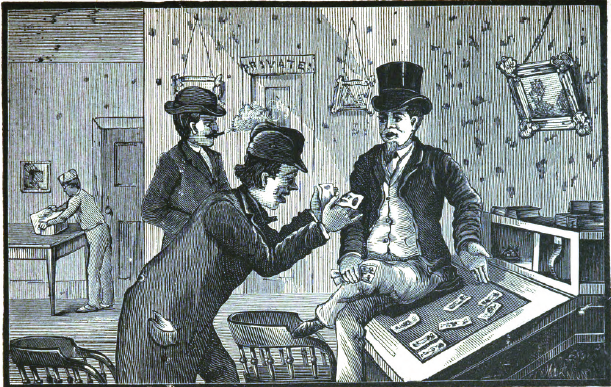
If the mark responds to the letter he is directed to meet the writer at a specific address, it may be a disreputable saloon in his own town, or he may be directed to a hotel another city. There he will be met by a steerer who will lead him to the signatory of the letter. He is taken to another location, the “factory,” which could be in another city altogether. Here he is shown a sample of the ”goods,” which will not actually be counterfeit but consist of crisp new legitimate bills. The mark may protest that they will not fool anyone, but inwardly he is amazed at how real they look. The “counterfeiters” make him an offer that, depending on the quantity, could be as low as six cents on the dollar.

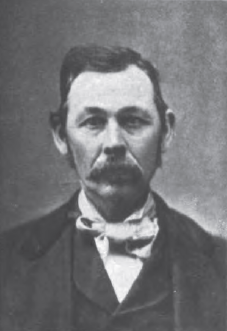
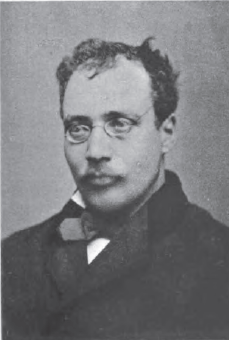
Charles-Smyth
"Doctor" Charles Smyth
A notorious sawdust man.

The mark agrees and pays cash for his green goods, the bills are counted in his presence, bundled, and put into a bag. While they celebrate the transaction with a drink, and discuss future deals, one of the gang will switch the bag of cash for another. As he leaves, the mark is warned that, for everyone’s safety, he must not look inside the bag until he reaches his destination.

Of course, when the bag is opened, it is found to contain nothing but blank paper, or enough sawdust to give it the proper weight. He is left with no recourse; only a fool would tell the police he was swindled while trying to buy counterfeit money. In the words of Alan Pinkerton:

“It is safer than almost any other system of swindling, because it is practiced upon men, whose cupidity overcomes their judgment, and who in their desire to swindle others, become dupes themselves. For this reason the “sawdust swindler” invariably escapes punishment, as in order to arrest these men the victims are compelled to acknowledge their own dishonesty.”

In spite of the reluctance of victims to come forward, by the end of the century, sawdust game and its players were well known to police. This, however, did not seem to have any effect on the number dupes it attracted.


Sources:

  • Byrnes, Thomas. Professional criminals of America. New York, N.Y: Cassel, 1886.
  • Pinkerton, Allan. Thirty years a detective: a thorough and comprehensive exposé of criminal practices of all grades and classes, containing numerous episodes of personal experience in the detection of criminals, and covering a period of thirty years' active detective life. New York: G.W. Carleton & Co., 1884.