
No. 358
Crime, Eccentricity, and the Sporting Life in 19th Century America.
May 01, 2017

An Easy Winner.

Architect John M. Merrick of New York triumphantly finishes his thirtieth canvas-back duck on the th
May 1, 2017
...
...

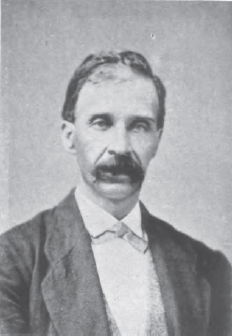
Tag: Thomas Byrnes

Inspector Thomas F. Byrnes.

3/4/2012

The Sawdust Game

The "sawdust game," was a confidence scam that only swindled those who deserved to be swindled.

1/10/2012

The Bunco Game

The term “bunco” has come to mean to any type of swindle, but in the 19th century it usually referred to a confidence game involving crooked gambling.

5/17/2011

Bank Heist

The Audacity of a Professional Thief.

4/3/2011
Our story began like a fairy tale:  At a New York City social gathering, a handsome, suave young Chinese lawyer meets the pretty, cultured daughter of a wealthy merchant prince from Macao, and the pair fall in love virtually at first sight.  Seven months later, in May 1928, the two are married, and go off on a romantic honeymoon trip, after which they live happily ever after…Well,
More...
Strange Company - 5/11/2026
"As his son I am proud of hisefforts to succeed in life"Jefferson Randolph Smith IIIArtifact #93-2Jeff Smith collection(Click image to enlarge) oapy's son hires a legal firm to stop the defamation of his father's name. At age 30, Jefferson Randolph Smith III, Soapy and Mary's oldest son, was protecting his father's legacy and his mother's reputation from "libel" and scandal. He was also
More...
Soapy Smith's Soap Box - 10/13/2025
John Sloan was a Village resident and something of a voyeur in the early 1900s, discreetly watching from his window or walking nearby streets in search of scenes to commit to canvas. He never lacked material, finding inspiration in the ordinary: a woman hanging laundry, men drinking in McSorley’s saloon, the elevated train snaking through […]
More...
Ephemeral New York - 5/11/2026
Youth With Executioner by Nuremberg native Albrecht Dürer … although it’s dated to 1493, which was during a period of several years when Dürer worked abroad. November 13 [1617]. Burnt alive here a miller of Manberna, who however was lately … Continue reading
More...
Executed Today - 11/13/2020
"Diamond Flossie" Murphy.(New York Journal, March 18, 1898.)Flossie Murphy was a flamboyant character, notorious in the demi-monde of New York City’s Tenderloin. She had a fondness for diamond jewelry, which she wore conspicuously, earning her the nickname, “Diamond Flossie.” But when she was found on the floor of her room on April 22, 1897, with a rope tied around her neck and all her jewelry
More...
Murder By Gaslight - 5/9/2026
Whatever you believe about the guilt or innocence of Lizzie Borden, I have always believed film makers do a great injustice to the story by not beginning at the beginning- the death on March 26, 1863 of the first Mrs. Borden. In the dying moments of Sarah Morse, Emma takes on the weight of the care of her little sister, not yet three years old. Emma herself was just 12 on March 1st. Emma has seen her mother suffer for a long time, seen her pain and loss of little Alice Esther. Emma is old enough
More...
Lizzie Borden: Warps and Wefts - 3/26/2026
  [Editor’s note: Guest writer, Peter Dickson, lives in West Sussex, England and has been working with microfilm copies of The Duncan Campbell Papers from the State Library of NSW, Sydney, Australia. The following are some of his analyses of what he has discovered from reading these papers. Dickson has contributed many transcriptions to the Jamaica […]
More...
Early American Crime - 2/7/2019

The Graces in a High Wind. | Chicago’s Latest Craze.

An Easy Winner.

An Easy Winner

Architect John M. Merrick of New York triumphantly finishes his thirtieth canvas-back duck on the thirtieth consecutive day.

One of the best known gourmets of New York is Mr. John M. Merrick, a famous architect. He is considered the greatest authority in the metropolis on luxurious living, and his views were quoted with respect, even by such an apostle of the cousine as the late Wm. Stuart. In a recent conversation Mr. Merrick declared that to eat thirty quail in thirty days was a treat which owed its difficultly, not to the monotony of the dish, but the natural dryness and insipidity of the bird. This opinion be offered to back practically by undertaking to eat a very different kind of wild. fowl—the canvas-back duck—at the rate of one a day for a month. The canvas-back is a very large and rich bird, and considerable doubt was expressed by epicures as to the possibility of the feat. But with true Galway pluck, Mr. Merrick demolished his thirtieth consecutive bird on New Year's day amid the applause of all beholders at Cable's restaurant on Broadway.


National Police Gazette January 15, 1887.