
No. 493
Crime, Eccentricity, and the Sporting Life in 19th Century America.
October 22, 2019

Hungry Joe.

The conmen of New York City were noted for their colorful nicknames: "Paper Collar Joe", "Grand Central Pete" Jimmy "the Kid" and the greatest of all "Hungry Joe".
October 22, 2019
...
...

Tag: Censorship

There are certain people who, for one reason or another, have a way of attracting people who are eager to murder them.  What makes the following case stand out is that exactly the opposite appears to have happened: A man was desperate to find someone willing to kill him, and he had a damned hard time achieving that goal.Samuel Resnick was a jeweler in Albany, New York, for nearly thirty
More...
Strange Company - 3/16/2026
"As his son I am proud of hisefforts to succeed in life"Jefferson Randolph Smith IIIArtifact #93-2Jeff Smith collection(Click image to enlarge) oapy's son hires a legal firm to stop the defamation of his father's name. At age 30, Jefferson Randolph Smith III, Soapy and Mary's oldest son, was protecting his father's legacy and his mother's reputation from "libel" and scandal. He was also
More...
Soapy Smith's Soap Box - 10/13/2025
Bond Street today is a pricey place to live. And so it was in the 1830s, when it became one of New York’s most exclusive enclaves. Wealthy residents fleeing the crowded and increasingly commercial neighborhoods below Houston Street sought refuge on this short little street, which only runs two blocks from Broadway to the Bowery. […]
More...
Ephemeral New York - 3/16/2026
Youth With Executioner by Nuremberg native Albrecht Dürer … although it’s dated to 1493, which was during a period of several years when Dürer worked abroad. November 13 [1617]. Burnt alive here a miller of Manberna, who however was lately … Continue reading
More...
Executed Today - 11/13/2020
About half past three, the morning of July 2, 1863, a young man on his way to work in Medina, Ohio, saw the home of Shubal Coy in flames. He alerted the neighbors, who came out to douse the flames with water. When the fire was under control, they went inside to look for the Coy family. They found Shubal lying in bed with nine stab wounds in his throat and breast, any one of them capable of
More...
Murder By Gaslight - 3/14/2026
The good-looking thirty-seven year old gentleman handling the reins behind the glossy matched pair pulling the spanking-new carriage drew the attention of more than one feminine eye.  Pacing down French St. at a sharp clip, the lady next to him, dressed neatly in a tailor-made suit with the latest in millinery fashion, smiled up at her coachman. Behind the lace curtains on the Hill section of Fall River, tongues were wagging about the unseemly pair. Lizzie Borden, acquitted of double homici
More...
Lizzie Borden: Warps and Wefts - 10/16/2025
  [Editor’s note: Guest writer, Peter Dickson, lives in West Sussex, England and has been working with microfilm copies of The Duncan Campbell Papers from the State Library of NSW, Sydney, Australia. The following are some of his analyses of what he has discovered from reading these papers. Dickson has contributed many transcriptions to the Jamaica […]
More...
Early American Crime - 2/7/2019

Hallow Eve Sports. | The Gloucester Sea Serpent

Hungry Joe.

Hungry Joe King of the Bunco Men

The conmen of New York City were noted for their colorful nicknames: “Paper Collar Joe" Bond, “Grand Central Pete" Lake, Jimmy “the Kid” Fitzgerald, and the greatest of all, “Hungry Joe” Lewis

Hungry Joe LewisHungry Joe Lewis
(Professional Criminals of America)

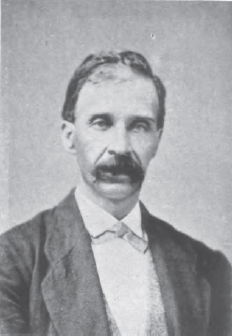
Joseph Lewis was given the sobriquet "Hungry Joe" for the soulful countenance he usually bore. An 1885 biography of Hungry Joe described it this way:

"His general expression, however, is one of a far-away, yearning sort, not exactly poetic, but sad and thoughtful, as though his mind was occupied with things outside of the usual frivolities of life."

This expression can be seen in Hungry Joe’s iconic mug shot in Inspector Byrnes’s Professional Criminals of America.

Hungry Joe was a bunco steerer (called “banco steerer” in New York and New England). He would quickly ingratiate himself to some stranger traveling through New York, gain his trust then lure him to some game or situation where the traveler would lose everything he had. Hungry Joe preferred preying on countrymen—farmers and other wealthy gentlemen unfamiliar with big city ways, who had come to town to sell crops or buy equipment.

Sometimes Joe would entice his mark to play banco, a rigged game involving dice or cards, in which early gains by the player quickly turned to enormous losses. The player would invariably pay to avoid publicity. Another scam he used was called the “envelope game.” The player pays ten dollars to select from a box full of envelopes. The envelope contains currency in amounts ranging from one to fifty dollars. The player can only bet his own money, not his winnings. In this game, the play is extended as long as possible and the player ultimately wins, only to find out later that he has traded his cash for envelopes full of counterfeit bills.

Other times Joe would introduce the mark to a beautiful woman with an endless supply of champagne. The mark would wake up the next day in a strange room with nothing left but an excruciating hangover. In at least one instance, Hungry Joe used this method to steal not only a farmer’s money but the crops he had come to town to sell.

Regardless of the game, the method of roping in the mark was always the same. An accomplice, known as a “feeler,” would identify a wealthy traveler then, through chance meetings and overheard conversations, gather as much information as he could about the man. The information would be related to Hungry Joe who, armed with this knowledge, would pretend to recognize the mark from his hometown. He would pose as the son of the man’s banker or another prominent citizen of his town, and the mark, pleased to be recognized by someone so worthy, would be open to whatever Hungry Joe proposed.

Hungry Joe Lewis

Hungry Joe’s most audacious score was fleecing Oscar Wilde out of $5,000 at a game of banco. During the English poet’s 1883 visit to New York City, Hungry Joe finagled an introduction and palled around with Wilde for a week, dining at New York’s finest hotels, before suggesting that they try a game. As everyone does, Oscar Wilde lost at banco and wrote Joe a check to cover his losses. The next day, realizing that he had been swindled, Wilde stopped payment on the check, but he did not press charges. The incident so impressed New York Police Inspector Thomas Byrnes that on a subsequent arrest he said to Hungry Joe,

“You are able to make a fortune honestly, for any man who has the ability to fool Oscar Wilde and to bunko him has ability not only to make a living honestly, but to make a fortune, and when you get out of your present strait I would advise you to turn your attention to something that is honest.”

Hungry Joe managed to avoid any major prison time until May 1885 when he was arrested for stealing $250 from an English tourist. He had lured Joseph Ramsden of Manchester into a game of three card monte and when Ramsden pulled out a roll of ten pound notes, Hungry Joe, in an uncharacteristic fit of impatience, grabbed the roll and ran. He was caught, arrested, and sentenced to four years in Sing Sing.

After serving his sentence, Hungry Joe Lewis allegedly took Inspector Byrnes’s advice and went straight, opening a laundry business.


Sources:

  • Asbury, Herbert. The Gangs of New York. New York: A. A. Knopf, 1928
  • Byrnes, Thomas. Professional Criminals of America. New York: Castle & Company,Ltd, 1886.
  • Sante, Luc. Low Life: Lures and Snares of Old New York . New York: Farrar, Straus and Giroux, 2003.
  • Tousey, Frank. The Life of Hungry Joe. New York: Frank Tousey, 1885.
  • "Wise Oscar Wilde." The Morning Record, Meriden, CT, 20 Oct 1893.