
No. 430
Crime, Eccentricity, and the Sporting Life in 19th Century America.
September 24, 2019

Duel of the Divas.

The question of who was more beautiful, Lillian Russel or Lola Montez was settled by two cowpokes in the Nevada desert in the 1890s.
September 24, 2019
...
...

Tag: Winter

Skating in Central Park.

1/10/2023

A Winter Scene.

Winter Pastime – A Skating Scene.

1/25/2016

Skating in Central Park.

Winter sports in the metropolis—a skating scene in Central Park.

2/9/2015
Via Newspapers.comOne of the more unusual “death omen” stories appeared in the “Sentinel and Democrat,” April 10, 1844:Mr. Ponting, a tailor, now residing in Bedfordbury, leading from New street to Chandos street, Covent garden, was in the autumn of the year 1819, accompanied by Mrs. Ponting, at Turnham green, when they called on a friend of the name of Smith, who still resides there. They walked
More...
Strange Company - 1/14/2026
"As his son I am proud of hisefforts to succeed in life"Jefferson Randolph Smith IIIArtifact #93-2Jeff Smith collection(Click image to enlarge) oapy's son hires a legal firm to stop the defamation of his father's name. At age 30, Jefferson Randolph Smith III, Soapy and Mary's oldest son, was protecting his father's legacy and his mother's reputation from "libel" and scandal. He was also
More...
Soapy Smith's Soap Box - 10/13/2025
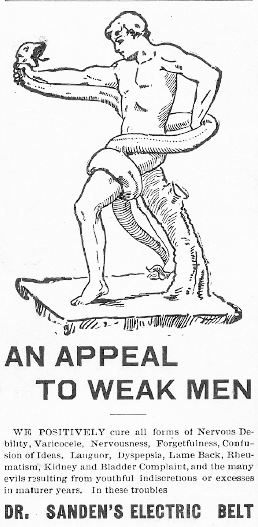
Manhattan started extending its land mass back in the colonial era, using construction debris, sunken ships, ashes, ballast, and other waste to reclaim land and enlarge the island. Pearl Street used to be the southern boundary; Greenwich Street was at the edge of the Hudson River. Manhattan continued to grow in the 19th century, but […]
More...
Ephemeral New York - 1/12/2026
Manhattan started extending its land mass back in the colonial era, using construction debris, sunken ships, ashes, ballast, and other waste to reclaim land and enlarge the island. Pearl Street used to be the southern boundary; Greenwich Street was at the edge of the Hudson River. Manhattan continued to grow in the 19th century, but […]
More...
Ephemeral New York - 1/12/2026
Harper's Weekly, August 20, 1870.Benjamin Nathan, a wealthy stockbroker and philanthropist, was found brutally beaten to death in his Manhattan home the morning of July 29, 1870. Some jewelry and a small amount of cash were stolen, and the police were quick to rule the incident a burglary gone bad. But if so, how and when did the burglars enter? And how could four others staying in the house
More...
Murder By Gaslight - 1/10/2026
The good-looking thirty-seven year old gentleman handling the reins behind the glossy matched pair pulling the spanking-new carriage drew the attention of more than one feminine eye.  Pacing down French St. at a sharp clip, the lady next to him, dressed neatly in a tailor-made suit with the latest in millinery fashion, smiled up at her coachman. Behind the lace curtains on the Hill section of Fall River, tongues were wagging about the unseemly pair. Lizzie Borden, acquitted of double homicide just six years earlier had come into her money and also her style of spending it on the good things in life.  Just what was going on between Lizzie and that coachman, unchaperoned and traveling together all around town? Chief among those who disapproved of the new coachman was sister Emma, who had been perfectly satisfied with Mr. Johnson, the former coachman who had managed their father’s Swansea farm. This new addition to the house on French St. was far too “at home” and casual for Emma’s proper standards. He did not behave sufficiently as a servant who ought to know his place. His presence in their home was causing gossip and attention, a deplorable situation for the retiring, modest older sister. Handsome Joe would have to go and Emma made sure of that in 1902 after three years of Joe’s service to the Borden sisters. Lizzie was not well-pleased with the dismissal. Ever since Emma Borden packed her bags and left French St. for good in 1905, friends, neighbors and now historians wonder what caused the split between two sisters who had been so close all their lives. Much has been made of the passing and short friendship Lizzie formed with actress Nance O’Neil as a possible cause of the rift, as well as “theater people” in the house and strong drink. Most likely it was a combination of things but one thing was for sure- Emma’s dismissal of the good-looking young coachman whom Lizzie had hired to drive her around town was a factor. 1900 census listing Joe, Annie Smith (housekeeper) Lizzie and Emma So, where did he come from and what became of Joseph Tetrault (also Tetreau and Tatro)?  Born on February 9, 1863 in Kingston, R.I. of French Canadian parents, he worked as a hairdresser/barber on Second Street in Fall River at one time.  Later we find him living a short distance away on Spring Street at a boarding house owned by Lizzie and Emma after the murders in 1892. His parents, Pierre Tetreau dit Ducharme and  his mother,Almeda Fanion were from Rouville, Quebec and had moved to Kingston, Rhode Island. Pierre worked in a woolen mill and had nine children with his first wife, Marie Denicourt, and six more with  second wife, Almeda. The last six included : Edward Peter 1861-1940 Joseph H.  1863-1929 Mary Elizabeth “Mamie” 1865-1956 Frederick A. 1871-1947 Francis “Frank” 1875-1935 Julia E.  1877-1973 We can only imagine the conversation between Lizzie and Emma about Joe Tatro – the arguments put forward, even heated discussions, but in the end, Lizzie had her way and in 1904 rehired Joe to resume his duties on French Street.  Added to Emma’s unhappiness about Nance O’Neil and other factors, Emma and Lizzie parted company in 1905. Joe remained driving Miss Lizzie until 1908, and for whatever reason, decided to move on. The 1908 directory lists him as “removed to Providence”. Joe never married. Perhaps he remembered his childhood in a house full of siblings and half siblings and parenthood never appealed to him. He decided to try his luck out in Ohio where his youngest sibling, Julia, had gone, now married to Alfred Lynch and where eventually all his full siblings would find their way. Al Lynch worked as a supervisor in a machine works in East Cleveland and he and Julia had two sons, Alfred Jr. and an oddly -named boy, Kenneth Borden Lynch.  One has to wonder about this last name.  Lizzie had two beloved horses, Kenneth and Malcolm. Was this a connection to Joe’s happy past on French Street where he had driven that team of horses?  Lizzie presented Joe with a handsome heavy gold watch chain when he left her in 1908.  The watch fob had an onyx intaglio inset of a proud horsehead to remind him of their days on French St. Joe’s youngest sibling Julia, who married Al Lynch. She was the mother of two sons including Kenneth Borden Lynch Sadly, Kenneth Borden Lynch was to marry, produce one son, and one day while attending to his motor vehicle, was run over by a passing Greyhound bus. Kenneth Borden Lynch, Joe’s nephew Joe Tatro developed cancer of the stomach and died at the age of 66 ½ from a sudden stomach hemorrhage on August 10, 1929.  His last occupation was one of a restaurant chef.  He was a long way from those carefree Fall River days.  He was buried in Knollwood Cemetery on August 12th from S.H. Johnson’s funeral home. His last address at 1872 Brightwood St. in East Cleveland is today just a vacant lot in a tired old residential neighborhood. He shared the home with another married sister, Mary R. Tatro Asselin.  There are still a few direct descendants of his immediate family alive, and they are aware of his connection to Lizzie Borden. Whatever memories of her, Joe took with him to the grave. (Photographs courtesy of Ancestry.com, Newspapers.com, The Cleveland Plain Dealer and Zillow.com)
More...
Lizzie Borden: Warps and Wefts - 10/16/2025
Harper's Weekly, August 20, 1870.Benjamin Nathan, a wealthy stockbroker and philanthropist, was found brutally beaten to death in his Manhattan home the morning of July 29, 1870. Some jewelry and a small amount of cash were stolen, and the police were quick to rule the incident a burglary gone bad. But if so, how and when did the burglars enter? And how could four others staying in the house
More...
Murder By Gaslight - 1/10/2026
The good-looking thirty-seven year old gentleman handling the reins behind the glossy matched pair pulling the spanking-new carriage drew the attention of more than one feminine eye.  Pacing down French St. at a sharp clip, the lady next to him, dressed neatly in a tailor-made suit with the latest in millinery fashion, smiled up at her coachman. Behind the lace curtains on the Hill section of Fall River, tongues were wagging about the unseemly pair. Lizzie Borden, acquitted of double homicide just six years earlier had come into her money and also her style of spending it on the good things in life.  Just what was going on between Lizzie and that coachman, unchaperoned and traveling together all around town? Chief among those who disapproved of the new coachman was sister Emma, who had been perfectly satisfied with Mr. Johnson, the former coachman who had managed their father’s Swansea farm. This new addition to the house on French St. was far too “at home” and casual for Emma’s proper standards. He did not behave sufficiently as a servant who ought to know his place. His presence in their home was causing gossip and attention, a deplorable situation for the retiring, modest older sister. Handsome Joe would have to go and Emma made sure of that in 1902 after three years of Joe’s service to the Borden sisters. Lizzie was not well-pleased with the dismissal. Ever since Emma Borden packed her bags and left French St. for good in 1905, friends, neighbors and now historians wonder what caused the split between two sisters who had been so close all their lives. Much has been made of the passing and short friendship Lizzie formed with actress Nance O’Neil as a possible cause of the rift, as well as “theater people” in the house and strong drink. Most likely it was a combination of things but one thing was for sure- Emma’s dismissal of the good-looking young coachman whom Lizzie had hired to drive her around town was a factor. 1900 census listing Joe, Annie Smith (housekeeper) Lizzie and Emma So, where did he come from and what became of Joseph Tetrault (also Tetreau and Tatro)?  Born on February 9, 1863 in Kingston, R.I. of French Canadian parents, he worked as a hairdresser/barber on Second Street in Fall River at one time.  Later we find him living a short distance away on Spring Street at a boarding house owned by Lizzie and Emma after the murders in 1892. His parents, Pierre Tetreau dit Ducharme and  his mother,Almeda Fanion were from Rouville, Quebec and had moved to Kingston, Rhode Island. Pierre worked in a woolen mill and had nine children with his first wife, Marie Denicourt, and six more with  second wife, Almeda. The last six included : Edward Peter 1861-1940 Joseph H.  1863-1929 Mary Elizabeth “Mamie” 1865-1956 Frederick A. 1871-1947 Francis “Frank” 1875-1935 Julia E.  1877-1973 We can only imagine the conversation between Lizzie and Emma about Joe Tatro – the arguments put forward, even heated discussions, but in the end, Lizzie had her way and in 1904 rehired Joe to resume his duties on French Street.  Added to Emma’s unhappiness about Nance O’Neil and other factors, Emma and Lizzie parted company in 1905. Joe remained driving Miss Lizzie until 1908, and for whatever reason, decided to move on. The 1908 directory lists him as “removed to Providence”. Joe never married. Perhaps he remembered his childhood in a house full of siblings and half siblings and parenthood never appealed to him. He decided to try his luck out in Ohio where his youngest sibling, Julia, had gone, now married to Alfred Lynch and where eventually all his full siblings would find their way. Al Lynch worked as a supervisor in a machine works in East Cleveland and he and Julia had two sons, Alfred Jr. and an oddly -named boy, Kenneth Borden Lynch.  One has to wonder about this last name.  Lizzie had two beloved horses, Kenneth and Malcolm. Was this a connection to Joe’s happy past on French Street where he had driven that team of horses?  Lizzie presented Joe with a handsome heavy gold watch chain when he left her in 1908.  The watch fob had an onyx intaglio inset of a proud horsehead to remind him of their days on French St. Joe’s youngest sibling Julia, who married Al Lynch. She was the mother of two sons including Kenneth Borden Lynch Sadly, Kenneth Borden Lynch was to marry, produce one son, and one day while attending to his motor vehicle, was run over by a passing Greyhound bus. Kenneth Borden Lynch, Joe’s nephew Joe Tatro developed cancer of the stomach and died at the age of 66 ½ from a sudden stomach hemorrhage on August 10, 1929.  His last occupation was one of a restaurant chef.  He was a long way from those carefree Fall River days.  He was buried in Knollwood Cemetery on August 12th from S.H. Johnson’s funeral home. His last address at 1872 Brightwood St. in East Cleveland is today just a vacant lot in a tired old residential neighborhood. He shared the home with another married sister, Mary R. Tatro Asselin.  There are still a few direct descendants of his immediate family alive, and they are aware of his connection to Lizzie Borden. Whatever memories of her, Joe took with him to the grave. (Photographs courtesy of Ancestry.com, Newspapers.com, The Cleveland Plain Dealer and Zillow.com)
More...
Lizzie Borden: Warps and Wefts - 10/16/2025
Via Newspapers.comOne of the more unusual “death omen” stories appeared in the “Sentinel and Democrat,” April 10, 1844:Mr. Ponting, a tailor, now residing in Bedfordbury, leading from New street to Chandos street, Covent garden, was in the autumn of the year 1819, accompanied by Mrs. Ponting, at Turnham green, when they called on a friend of the name of Smith, who still resides there. They walked
More...
Strange Company - 1/14/2026
Horatio Alger Story. | The Advent of Spiritualism.

Duel of the Divas.

Nevada, 1890s -In an age when the closest thing to mass media was a cigar box label both Lillian Russell and Lola Montez were international superstars. Both were stage actresses and performers and both were known for their beauty. The question of which was more beautiful was settled by two cowpokes in the Nevada desert in the 1890s.

300px-Lillian_Russell-young

Lillian Russell

Born Helen Louise Leonard in Clinton Iowa, in 1861, Lillian Russell traveled to New York in 1878 hoping for a career in the opera. She found herself, instead in the chorus of H.M.S. Pinafore. By 1880 she was starring on Broadway and traveling between New York and London for singing engagements. In 1891 she was the star of the Lillian Russell Opera Company.

Though she preferred oysters and champagne at Delmonico’s in New York with her long-time companion Diamond Jim Brady - he stuck with her when four husbands did not - Lillian Russell did perform in the old west and it is known that she sang in the opera house in Virginia City, Nevada.

lola_montez

Lola Montez

Lola Montez, like all great pop stars, invented herself. She was born Elizabeth Rosanna Gilbert in Limerick, Ireland in 1820 and traveled as a child to Calcutta, India. Fearing she was growing up wild in India, her mother and stepfather send her to live with relatives in Scotland where she became known as the “The queer, wayward Indian girl.”

After a failed marriage and a torrid affair with an English soldier, Eliza Gilbert went to Spain to learn flamenco dancing. When she returned to England Eliza was now Maria Dolores de Porris y Montez - better known as Lola. She was not a great dancer, but her signature move, the “spider dance” shocked audiences around the world. After three marriages and some scandalous affairs with European royalty, she came to California. Like Lillian Russell, Lola Montez performed for prospectors in the old west, but she did it a generation earlier.

While it is possible that cowboys Dave Colfax and Jose Madero had actually seen their idols, Lillian Russell and Lola Montez perform on stage, it is more likely they knew them only from cigar box portraits. Dave carried a picture of Lillian Russell in his bedroll and often displayed it in saloons. He would turn ugly when anyone disagreed that Miss Russell was the most beautiful woman in the world. Madero, who believed Lola Montez was Spanish, declared that she deserved that title. He went to his saddlebag and returned with a tattered picture of his beloved Lola.

The argument became heated and Madero drew his revolver and shot a hole through Lillian Russell’s nose. An enraged Dave Colfax pulled out his own revolver and shot Jose Madero dead. Dave Colfax was tried for murder. The jury was shown the pictures and after seeing the damage done to Lillian Russell they returned a verdict of justifiable homicide.

Resolved in a court of law: Lillian Russell was the most beautiful woman in the world.


Sources:

  • Burke, John. Duet in diamonds; the flamboyant saga of Lillian Russell and Diamond Jim Brady in America's gilded age,. New York: Putnam, 1972.
  • Mahon, Elizabeth Kerri. Scandalous women: the lives and loves of history's most notorious women. New York: Penguin Group, 2011.

Lillian Russell Papers

Lola Montez

Their only bed A group of homeless New York Newsboys.

The rapid population expansion of New York City in the years following the Civil War was accompanied by an equally rapid expansion of in the population of homeless boys sleeping in alleys and living hand-to-mouth on the city streets. Sometimes taking to the streets to escape abusive fathers, sometimes abandoned by unwed mothers, the waifs had no family connections and no identities beyond the nicknames they gave each other. Though tough and ruggedly independent, to a great extent they survived by taking care of each other.

There were two classes of homeless boys – “street arabs” and “gutter-snipes.” Street arabs were the older, stronger boys. Sturdy and self-reliant, they were always ready to fight for what was theirs, and ready, as well, to fight for the weaker gutter-snipes who looked to them for protection. Gutter-snipes were younger boys—sometimes as young as four or five—brutalized by abusive parents and left to the dangers of the street until they find the protection of an older boy. In time the gutter-snipe would harden into a full-fledged arab with snipes of his own.

extra

The most enterprising of these boys—both street arabs and gutter-snipes—became newsboys hawking the many competitive daily newspapers sold on the streets of the city. Being a newsie required a considerable amount of self-discipline. A newsie had to wake before dawn and arrive at the newspaper with enough money in his pocket to pay for the papers he would be hawking throughout the day. During the regular course of business, they respected each other’s turf and would not interfere with another boys clientele. But a fire, a brawl or any other event that drew a crowd would also draw newsboys competing directly with each other.

A number of societies and agencies were established to aid the homeless boys of New York but the boys were extremely independent and suspicious of handouts. Better to sleep outside than to risk being trapped and taken the House of Refuge. The most successful aid organization was the Newsboy’s Lodging House which offered a bed and bath for six cents a night and a hot supper for four cents. Skeptical at first, the boys came to view the Lodging House as their hotel. Rules were minimal, a gymnasium was available for their use, and reading lessons were provided for those interested.

But even with affordable lodging, many of the boys preferred sleeping outside. They were avid theatre goers and given the choice between a warm bed and a ticket to a play or vaudeville show were likely to choose the latter. Alcohol, gambling and the rest of the urban vices worked to drive the older boys from the straight and narrow.  Though the Newsboy’s Lodging House could boast of many triumphs, including homeless boys who went on to graduate from great universities, more often the lessons learned on the street prepared the boys for the fastest growing occupation in the city— crime.


Sources

  • Campbell, Helen, Thomas Wallace Knox, and Thomas Byrnes. Darkness and daylight, or, Lights and shadows of New York life: a woman's pictorial record of gospel, temperance, mission, and rescue work "in His Name" .... Hartford, Conn.: A.D. Worthington, 1897.
  • Needham, Geo. C.. Street Arabs and gutter snipes The pathetic and humorous side of young vagabond life in the great cities, with records of work for their reclamation.. Boston: D.L. Guernsey, 1884.