
The Brooklyn Bridge is celebrating its 143rd birthday on May 24, the day Gilded Age New Yorkers could finally walk across this wondrous span and celebrate the uniting of Brooklyn and Manhattan. Over close to a century and a half, the Brooklyn Bridge has taken the honor of the city’s most painted and photographed structure. […]
Maggie Crowley.(New York Journal, March 16, 1898.)On March 15, 1898, a woman was found strangled to death in the courtyard of a New York City tenement. She was the seventh strangulation victim in the Tenderloin district over the previous four years. What made this case different was that even before the victim was identified, the police had a suspect in custody. Some believed he was
Whatever you believe about the guilt or innocence of Lizzie Borden, I have always believed film makers do a great injustice to the story by not beginning at the beginning- the death on March 26, 1863 of the first Mrs. Borden. In the dying moments of Sarah Morse, Emma takes on the weight of the care of her little sister, not yet three years old. Emma herself was just 12 on March 1st. Emma has seen her mother suffer for a long time, seen her pain and loss of little Alice Esther. Emma is old enough
Via Newspapers.comI put this missing-persons story into the “mini mysteries” file, due to the unsettling lack of information surrounding the case. The “Miami Herald,” October 6, 1985:You could set your clock by Irene Matheson.Since Perrine Elementary School opened six years ago, Matheson was always the first person to arrive. She unlocked the cafeteria door at 5:45 a.m., let in the cook at
"As his son I am proud of hisefforts to succeed in life"Jefferson Randolph Smith IIIArtifact #93-2Jeff Smith collection(Click image to enlarge)
oapy's son hires a legal firm to stop the defamation of his father's name.
At age 30, Jefferson Randolph Smith III, Soapy and Mary's oldest son, was protecting his father's legacy and his mother's reputation from "libel" and scandal. He was also
Via Newspapers.comI put this missing-persons story into the “mini mysteries” file, due to the unsettling lack of information surrounding the case. The “Miami Herald,” October 6, 1985:You could set your clock by Irene Matheson.Since Perrine Elementary School opened six years ago, Matheson was always the first person to arrive. She unlocked the cafeteria door at 5:45 a.m., let in the cook at
"As his son I am proud of hisefforts to succeed in life"Jefferson Randolph Smith IIIArtifact #93-2Jeff Smith collection(Click image to enlarge)
oapy's son hires a legal firm to stop the defamation of his father's name.
At age 30, Jefferson Randolph Smith III, Soapy and Mary's oldest son, was protecting his father's legacy and his mother's reputation from "libel" and scandal. He was also
The Brooklyn Bridge is celebrating its 143rd birthday on May 24, the day Gilded Age New Yorkers could finally walk across this wondrous span and celebrate the uniting of Brooklyn and Manhattan. Over close to a century and a half, the Brooklyn Bridge has taken the honor of the city’s most painted and photographed structure. […]
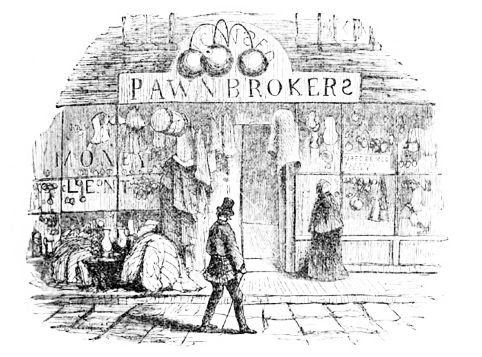
In theory, a pawn ticket would be ideal collateral for a loan. The value is printed on the ticket and the pawned object it represents is easily worth three times that amount. In practice, however, anyone who loaned money to a stranger with a pawn ticket as collateral found himself the owner of a very expensive piece of paper.
The pawn-ticket game had the same appeal as all con games—the lure of easy money—but it was simpler than most. The holder of a pawn ticket, claiming to be in desperate need of money, was willing to pay high interest for a short-term loan, using the ticket, worth far more than the borrowed amount, as collateral. Finding a willing lender was not difficult; sometimes just a classified ad in a newspaper did the trick:
Anyone who answers this ad will be visited by a gentleman with a clever story and a pawn ticket or two to be used as collateral. He will emphasize that the jewelry in pawn is worth far more than $200 which will guarantee his return in a week with the promised $50. Of course, the borrower does not return and when the lender redeems the pawn ticket he finds that he is not able to sell the jewelry for anything near the $200 it had cost him to get it out of pawn.
The pawn-ticket game worked because the conmen were in league with the pawnbrokers who furnished them with tickets and who made a sizable profit if the bogus tickets were redeemed. The game was so lucrative that a number of people in New York City were able to make their living this way.
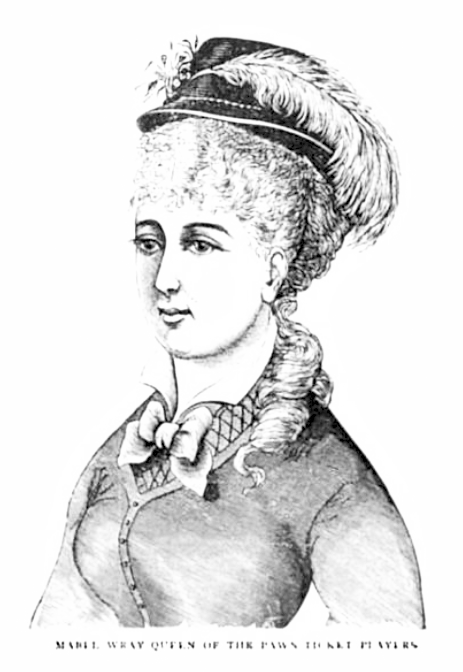
Hotels were another good source of marks for the pawn-ticket games. Traveling men proved to be extremely trusting of newly acquired drinking buddies and young ladies they had known for only one evening. In the 1870s, Mable Wray was known as the “Queen of Pawn-Ticket Players” for her ability to secure loans from married men away from their wives, using worthless pawn tickets as collateral.
Sources:
Cochrane, Charles H.. "Humbugs Labelled "Business Opportunities"." Moody's Magazine: The Investors' Monthly May 1906: 666.
Farley, Phil. Criminals of America, or, Tales of the lives of thieves enabling every one to be his own detective : with portraits, making a complete rogues' gallery. New York: Author's edition, 1876.
"We follow vice and folly where a police officer dare not show his head, as the small, but intrepid weasel pursues vermin in paths which the licensed cat or dog cannot enter."
The Sunday Flash 1841