




Strange Company - 9/25/2026
Early American Crime - 2/7/2019

Soapy Smith's Soap Box - 10/13/2025
Murder By Gaslight - 9/19/2026
Executed Today - 11/13/2020

Gold from Seawater! | “The Wickedest Man in New York.”
Kate Warne.
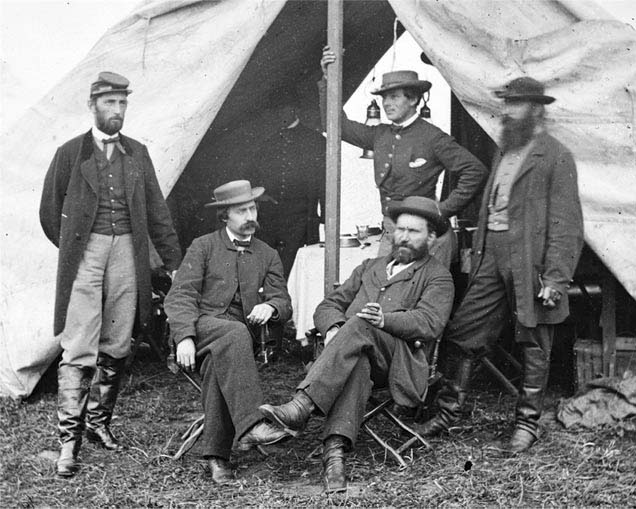 This is believed to be the only photograph of Kate Warne, America’s first female detective (standing behind Allan Pinkerton.)
 "She was above the medium height, slender, graceful in her movements, and perfectly self-possessed in her manner. I invited her to take a seat, and then observed that her features, although not what would be called handsome, were of a decidedly intellectual cast. Her eyes were very attractive, being dark blue, and filled with fire. She had a broad, honest face, which would cause one in distress instinctively to select her as a confidante, in whom to confide in time of sorrow, or from whom to seek consolation. She seemed possessed of the masculine attributes of firmness and decision, but to have brought all her faculties under complete control."
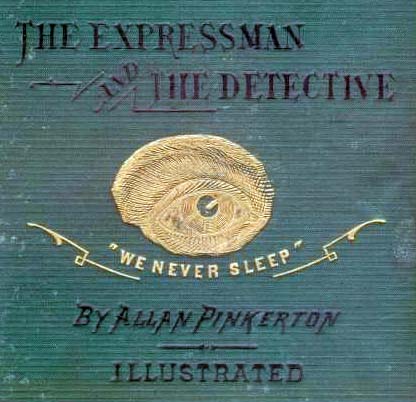
Kate Warne soon proved herself to be indispensable. In 1858 the Pinkerton Agency was hired by Adams Express in Montgomery, Alabama, to capture a thief who had stolen $40,000 from a locked pouch somewhere between Montgomery and Augusta, Georgia. Warne contributed to the case by gaining the confidence of Mrs. Nathan Maroney, wife of the suspected thief and obtaining information from her. The thief was convicted and all but $400 of the stolen money was recovered. The story was published by Pinkerton as The Expressman and the Detective, the first of series of books based on Pinkerton’s cases.
Kate Warne’s most important case was “The Baltimore Plot” to assassinate President Lincoln. The Pinkertons had been hired by the Philadelphia, Wilmington and Baltimore Railroad, to investigate the possibility of sabotage by secessionist groups. Warne was one of five agents sent in February 1861 to Baltimore, a hotbed of secessionist activity. Posing as a wealthy southern belle, Kate Warne was able to infiltrate social gatherings. She acquired information confirming not only the secessionist’s plan to sabotage railroads but an imminent plot to assassinate the president in Baltimore.
President-elect Lincoln would be traveling from his home in Springfield, Illinois to Washington, D.C. for his inauguration. The trip involved changing trains in Baltimore, traveling about a mile by carriage between stations. This is when the assassins planned to strike. Dubious at first, the president was finally convinced by Pinkerton of the danger, but because of scheduled public ceremonies in Harrisburg and Philadelphia, he did not want to change his travel plans.
A new plan was put into place by the Pinkertons, including code names for the principals—Pinkerton was “Plums,” Lincoln was “Nuts,” Kate Warne used two aliases, Mrs. M. Barley (M.B.) and Mrs. Cherry. Warne made arrangements for the president, incognito, to take a different train from Philadelphia. President Lincoln disguised himself as an invalid, and Kate Warne posed as his sister. They had adjoining berths in the sleeping car out of Philadelphia. Warne remained awake and alert all night until the train reached Washington. Legend says that the Pinkertons’ motto “We Never Sleep,” was inspired by Kate Warne’s sleepless train ride.
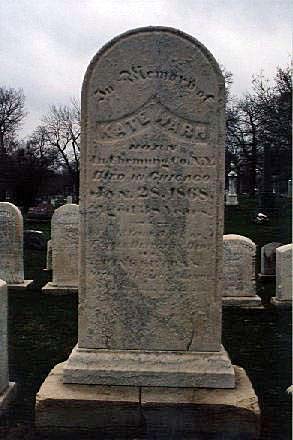
Warne was an effective Union spy during the Civil War, and after the war continued as an active detective, as well as managing Pinkerton’s female detectives. Kate Warne and Allan Pinkerton would often pose as husband and wife during investigations, and it was rumored that they were also clandestine lovers. Kate Warne died suddenly of pneumonia in on January 28, 1868, with Pinkerton by her bedside. She was buried in Pinkerton’s family plot in Chicago’s Graceland Cemetery.
- American Civil War Espionage. Memphis: Books LLC, 2011.
- Mackay, James A.. Allan Pinkerton: the first private eye. New York: J. Wiley & Sons, 1997.
- Pinkerton, Allan. The expressman and the detectives. New York: G.W. Carleton, 1886.
- http://www.pimall.com/nais/pivintage/katewarne.html
Welcome to the National Night Stick
"We follow vice and folly where a police officer dare not show his head, as the small, but intrepid weasel pursues vermin in paths which the licensed cat or dog cannot enter."The Sunday Flash 1841

- 1810s
- 1820s
- 1830s
- 1840s
- 1850s
- 1860s
- 1870s
- 1880
- 1880s
- 1890
- 1890s
- Abduction
- Abortion
- Accident
- Actors
- Adultery
- Advertisement
- African Americans
- Alabama
- Alcohol
- Allan Pinkerton
- America
- Animal
- Assault
- Axe Murder
- Bank Robbery
- Barnum
- Baseball
- Beer
- Bet
- Bicycle
- Billiards
- Bio
- Boston
- Boxing
- Boys
- Broadway
- Brooklyn
- Brothel
- Buffalo
- Burglar
- Burglary
- Burlesque
- California
- Canada
- Cartoon
- Censorship
- Chicago
- children
- Chorus Girls
- Christmas
- Cincinnati
- Civil War
- Clergy
- Clubbing
- College
- Colorado
- Comstock
- Con Game
- Connecticut
- Counterfeit
- Court
- Cowboy
- Crime
- cross-dressing
- Crossdressing
- Cursing
- Dancing
- Deception
- Delinquents
- Denver
- Detectives
- Detroit
- Dime Novels
- Disaster
- Disguise
- Disorderly conduct
- Divorce
- Domestic Violence
- Drowning
- Duel
- Editorial
- Election
- Entertainment
- Event
- Fad
- Family
- Fashion
- Fight
- Fire
- Florida
- Food
- Football
- Forger
- Fraud
- Gambling
- Gangs
- Georgia
- Great Detectives
- Gunshot
- Hoax
- Holiday
- Horses
- Hotel
- Illinois
- Indiana
- Insanity
- Jail Break
- Jealousy
- Justice
- Kansas
- Kentucky
- Little Murders
- Louisiana
- Lynching
- Maine
- Marriage
- Maryland
- Massachusetts
- Medicine
- Michigan
- Minnesota
- Missouri
- Montana
- Murder
- Music
- Nevada
- New Hampshire
- New Jersey
- New Orleans
- New Year
- New York
- New York City
- Newsboys
- Newspaper
- Nudity
- Obscenity
- Ohio
- Opium
- Pennsylvania
- Performer
- Petrified man
- Photography
- Pickpocket
- Poisoning
- Police
- Police Gazette
- Politics
- Prank
- Prison
- Prostitution
- Railroad
- Rape
- Rats
- Reform
- Religion
- Reporters
- Revenge
- Rhode Island
- Robbery
- Romance
- Saloon
- San Francisco
- Scandal
- Science
- Seasonal
- Sex
- Slashing
- Society
- Spiritualism
- Sport
- Sports
- Spousal Abuse
- St. Louis
- Stabbing
- Steamboat
- Steamship
- Stock Broker
- Suicide
- Summer
- Tammany Hall
- Temperance
- Tennessee
- Texas
- Theatre
- Theft
- Thomas Byrnes
- Valentine
- Vigilantes
- Voyeur
- War
- Washington D.C.
- Wife beaters
- Winter
- Women