
The Bunco Game



Strange Company - 8/7/2026
Early American Crime - 2/7/2019

Soapy Smith's Soap Box - 10/13/2025
Murder By Gaslight - 8/1/2026
Executed Today - 11/13/2020

Belles of the Bowling Alley | A Plucky Elberon, N. J., Girl
The Bunco Game
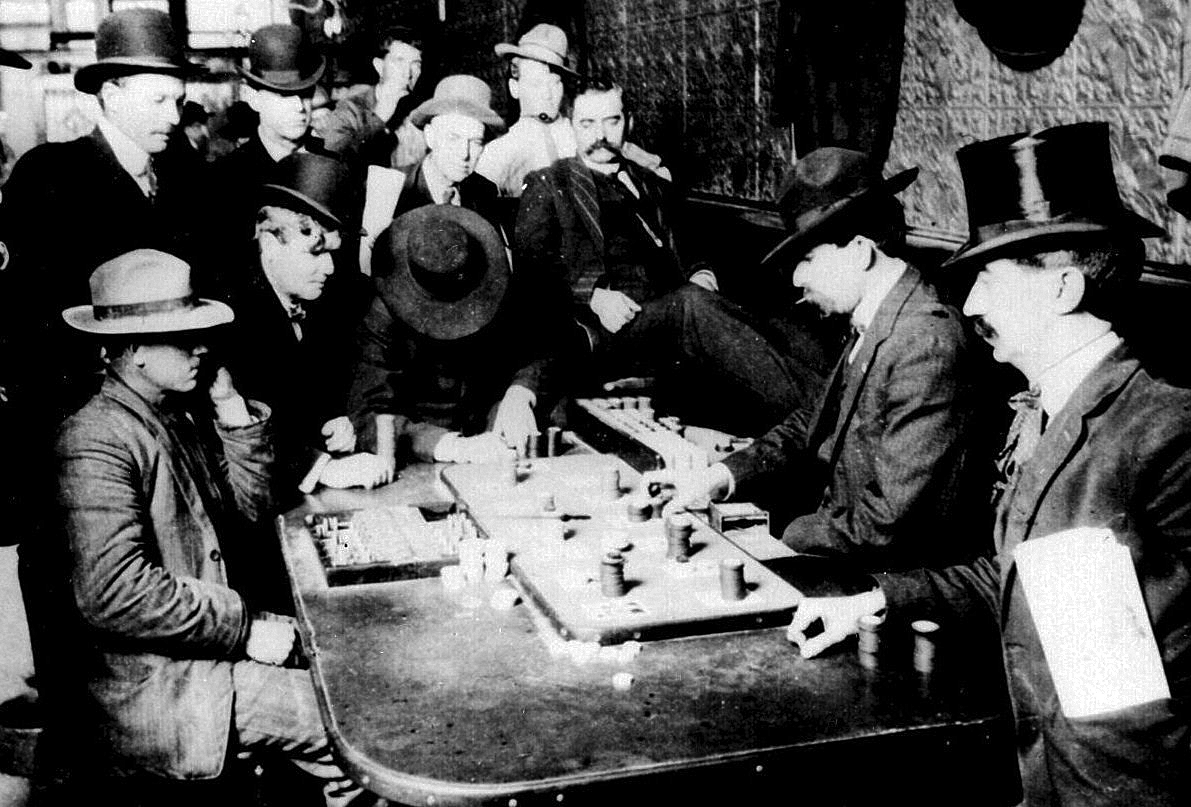
New York, New York - 1882 The term “bunco” has come to mean to any type of swindle, but in the 19th century it usually referred to a confidence game involving crooked gambling.
“Bunco” and “banco” were used interchangeably and the generic term evolved from the game of banco, a popular dice or card game devised specifically bilk the unsuspecting. Banco was the American version of an English game called Eight Dice Cloth. It was first played in San Francisco during the 1849 gold rush and rapidly spread to the east. The game consisted of a cloth with forty-eight numbered square flaps. The player rolled eight dice or drew eight cards and summed the values to determine which flap to open. Beneath the flaps were either prize amounts, a star, indicating the player can take another turn after paying a nominal amount, and two squares of special interest to the bunco man - the “conditional” and the “state.” The conditional awards the player a large prize - sometimes as large as $10,000 - provided he pays in an equal amount. If his next turn reveals a star or a cash prize he gets his money back along with the prize. If the player gets the state number he loses all, including the cash paid for the conditional.
The game is deceptively simple but involves a team of the bunco men to pull off. The first is the “roper” or “roper-in” who loiters in hotels, train stations, and steamboat docks, looking for business travelers likely to be carrying large sums of cash.
He will approach the man he doesn’t know and say something like, “Hello, Mr. Jones, how are all my friends back in Greenville?”

The mark will respond with something like, “You are mistaken sir; I am Mr. Brown from Austin, Texas.”
The roper makes his apologies, then takes what he has learned about Mr. Brown to the “steerer.” The steerer, armed with a book called a bank-note reporter, looks up Austin, Texas and finds the name of the major bank in that city, along with its president and other officers. The steerer will now approach Mr. Brown, address him by his name, and remind him that they had met before. He will say they had been introduced by his uncle, the bank president. Mr. Brown, flattered that he is recognized in a strange city by the nephew of such a prominent man, will overlook the fact that he does not remember the meeting. The steerer will take Mr. Brown out for a night on the town, get him as drunk as possible, and take him to a gambling den to play a new game that is easy to win.
Here they meet the, the “banker” who, unbeknownst to Mr. Brown, is another associate of the steerer, and controls every turn of the game. Mr. Brown and his new friend agree to play together, sharing profit or loss, and in the early stages, profits mount up quickly. But invariably the players will draw the conditional space, and the banker will give them a choice—the possibility of winning a large cash prize in exchange for equally large cash bet, or lose all of their current winnings. The steerer will persuade Mr. Brown that they must take advantage of this easy money, but unfortunately he has not brought enough cash. Brown agrees it is a sure thing and puts up the full amount. Of course the next play reveals the state square, the blank, they lose all.
Mr. Brown is stunned; how had things gone so terribly wrong? As they leave the steerer expresses sorrow at leading such a prominent man to financial disaster. He takes brown’s address and promises to pay back all the money he has lost. Of course, after they part, Brown never sees the man or his money again. Brown is unlikely to report such an embarrassing transaction, but if he does, the police will find nothing but an empty apartment where the game was played the night before.
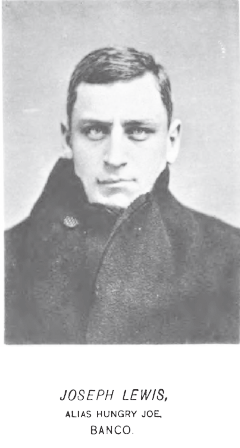
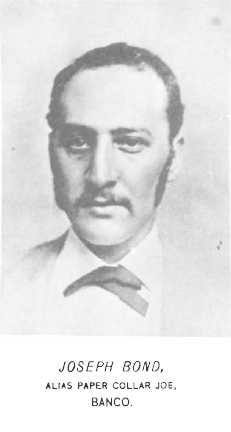
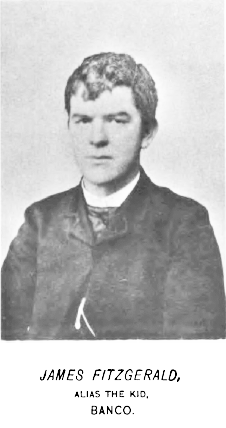
In spite of their elusiveness, bunco men were well known to the police in the 1880s. They had colorful nicknames like, “Paper Collar Joe” Bond, “Grand Central Pete” Lake, and James “The Kid” Fitzgerald.
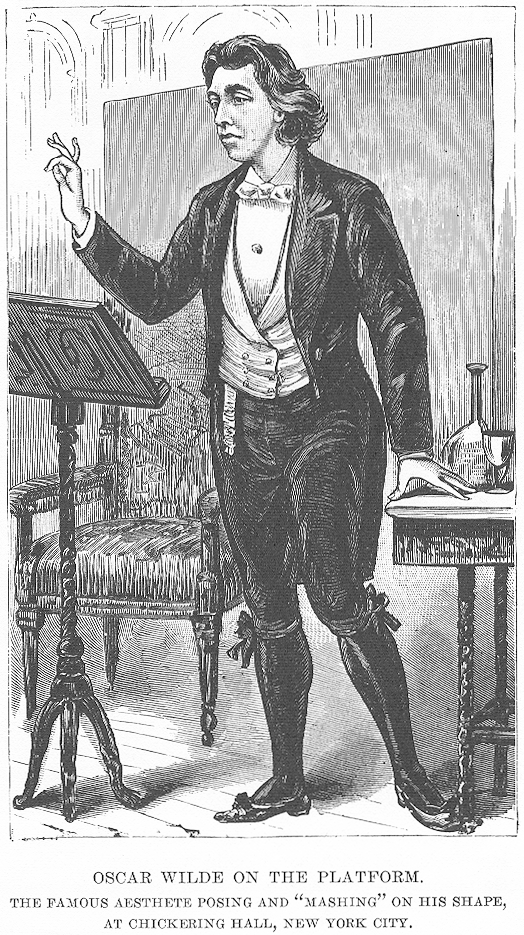
The most audacious of the bunco steerers was “Hungry Joe” Lewis, who swindled Oscar Wilde during his 1882 visit to New York City. In the words of Inspector Thomas Byrnes:
“Sharp as was Oscar Wilde when he reaped a harvest of American dollars with his curls, sun-flowers and knee-breeches, he could not refrain from investing in a speculation against which he was "steered" by the notorious Hungry Joe.”
The affable and fast-talking Hungry Joe befriended Oscar Wilde for a week before steering him to a banco game where the poet lost $5000. But in a rare lapse of judgment, Hungry Joe and his crew agreed to take a personal check. When he realized the following day that he had been swindled, an embarrassed Oscar Wilde stopped payment.
By the way, the men in the picture at the top are not playing banco, they are playing faro, a bunco game in its own right, and a story for another day.
Sources:
- Byrnes, Thomas. Professional criminals of America . New York, N.Y: Cassel, 1886.
- Eldridge, Benjamin P., and William B. Watts. Our rival, the rascal a faithful portrayal of the conflict between the criminals of this age and the defenders of society, the police. Boston, Mass.: Pemberton Pub. Co., 1897
- Smith, Gene, and Jayne Barry Smith. The police gazette . New York: Simon and Schuster, 1972.
Welcome to the National Night Stick
"We follow vice and folly where a police officer dare not show his head, as the small, but intrepid weasel pursues vermin in paths which the licensed cat or dog cannot enter."The Sunday Flash 1841
- 1810s
- 1820s
- 1830s
- 1840s
- 1850s
- 1860s
- 1870s
- 1880
- 1880s
- 1890
- 1890s
- Abduction
- Abortion
- Accident
- Actors
- Adultery
- Advertisement
- African Americans
- Alabama
- Alcohol
- Allan Pinkerton
- America
- Animal
- Assault
- Axe Murder
- Bank Robbery
- Barnum
- Baseball
- Beer
- Bet
- Bicycle
- Billiards
- Bio
- Boston
- Boxing
- Boys
- Broadway
- Brooklyn
- Brothel
- Buffalo
- Burglar
- Burglary
- Burlesque
- California
- Canada
- Cartoon
- Censorship
- Chicago
- children
- Chorus Girls
- Christmas
- Cincinnati
- Civil War
- Clergy
- Clubbing
- College
- Colorado
- Comstock
- Con Game
- Connecticut
- Counterfeit
- Court
- Cowboy
- Crime
- cross-dressing
- Crossdressing
- Cursing
- Dancing
- Deception
- Delinquents
- Denver
- Detectives
- Detroit
- Dime Novels
- Disaster
- Disguise
- Disorderly conduct
- Divorce
- Domestic Violence
- Drowning
- Duel
- Editorial
- Election
- Entertainment
- Event
- Fad
- Family
- Fashion
- Fight
- Fire
- Food
- Football
- Forger
- Fraud
- Gambling
- Gangs
- Georgia
- Great Detectives
- Gunshot
- Hoax
- Holiday
- Horses
- Hotel
- Illinois
- Indiana
- Insanity
- Jail Break
- Jealousy
- Justice
- Kansas
- Kentucky
- Little Murders
- Louisiana
- Lynching
- Maine
- Marriage
- Maryland
- Massachusetts
- Medicine
- Michigan
- Minnesota
- Missouri
- Montana
- Murder
- Music
- Nevada
- New Hampshire
- New Jersey
- New Orleans
- New Year
- New York
- New York City
- Newsboys
- Newspaper
- Nudity
- Obscenity
- Ohio
- Opium
- Pennsylvania
- Performer
- Petrified man
- Photography
- Pickpocket
- Poisoning
- Police
- Police Gazette
- Politics
- Prank
- Prison
- Prostitution
- Railroad
- Rape
- Rats
- Reform
- Religion
- Reporters
- Revenge
- Rhode Island
- Robbery
- Romance
- Saloon
- San Francisco
- Scandal
- Science
- Seasonal
- Sex
- Slashing
- Society
- Spiritualism
- Sport
- Sports
- Spousal Abuse
- St. Louis
- Stabbing
- Steamboat
- Steamship
- Stock Broker
- Suicide
- Summer
- Tammany Hall
- Temperance
- Tennessee
- Texas
- Theatre
- Theft
- Thomas Byrnes
- Valentine
- Vigilantes
- Voyeur
- War
- Washington D.C.
- Wife beaters
- Winter
- Women