
Via Newspapers.comThis brief, but particularly unsettling UFO account was given by John Keel in the “Staten Island Advance,” June 29, 1967:One rainy night in early March, Beau Shertzer of Huntington, W. Va., and a young nurse, were riding in a Red Cross Bloodmobile along Route 2 in the Ohio Valley. Suddenly, according to their story, a bright glare fell over the night-shrouded road. Looking out
Whatever you believe about the guilt or innocence of Lizzie Borden, I have always believed film makers do a great injustice to the story by not beginning at the beginning- the death on March 26, 1863 of the first Mrs. Borden. In the dying moments of Sarah Morse, Emma takes on the weight of the care of her little sister, not yet three years old. Emma herself was just 12 on March 1st. Emma has seen her mother suffer for a long time, seen her pain and loss of little Alice Esther. Emma is old enough
The upside to a constantly changing city is the sudden resurfacing of a faded store sign. Case in point: the outline of the “Cards-U-Like” Hallmark store on First Avenue between 75th and 76th Streets. I’m placing it in the late 1970s because of the cute cursive letters, and the earliest newspaper ads I could find […]
"As his son I am proud of hisefforts to succeed in life"Jefferson Randolph Smith IIIArtifact #93-2Jeff Smith collection(Click image to enlarge)
oapy's son hires a legal firm to stop the defamation of his father's name.
At age 30, Jefferson Randolph Smith III, Soapy and Mary's oldest son, was protecting his father's legacy and his mother's reputation from "libel" and scandal. He was also
(New York Evening Journal, March 18, 1898)Around 1
a.m. on September 2, 1896, Samuel Meyers ran out of the tenement at 202 East 29th
Street, screaming, “Murder! Murder! Police! Police!”
Patrolman
Tyler heard his cries and ran to the spot.
“My wife
is murdered!” said Meyers, “Somebody has killed my wife. She’s dead.”
Tyler and another
officer followed Meyers to a second-floor apartment.
Via Newspapers.comThis brief, but particularly unsettling UFO account was given by John Keel in the “Staten Island Advance,” June 29, 1967:One rainy night in early March, Beau Shertzer of Huntington, W. Va., and a young nurse, were riding in a Red Cross Bloodmobile along Route 2 in the Ohio Valley. Suddenly, according to their story, a bright glare fell over the night-shrouded road. Looking out
"As his son I am proud of hisefforts to succeed in life"Jefferson Randolph Smith IIIArtifact #93-2Jeff Smith collection(Click image to enlarge)
oapy's son hires a legal firm to stop the defamation of his father's name.
At age 30, Jefferson Randolph Smith III, Soapy and Mary's oldest son, was protecting his father's legacy and his mother's reputation from "libel" and scandal. He was also
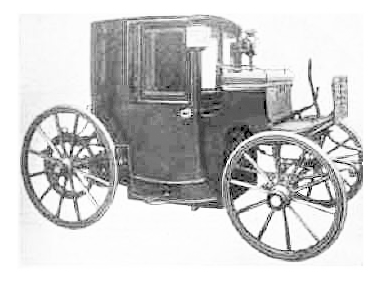
The first automobile in Manhattan was a Woods Electric Brougham owned by Diamond Jim Brady. After its maiden voyage down Fifth Avenue the NYPD put a ban on horseless carriages.
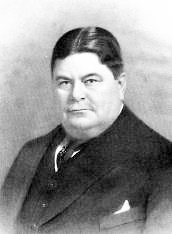
Diamond Jim Brady.
James Buchanan Brady, better known as “Diamond Jim,” was the most flamboyant of all the Gilded Age millionaires. Even in those extravagant times, Diamond Jim Brady was the undisputed master of conspicuous consumption. His nickname derived from his well-known love of diamonds which adorned everything he owned, from his underwear to the spokes of his bicycle wheels. Equally famous was his gargantuan appetite which he satisfied with several multi-course meals a day. A typical dinner might include a dozen oysters, six crabs, bowls of turtle soup, followed by a main course of two whole ducks or six or seven lobsters, a sirloin steak, and one or two whole pies for dessert.
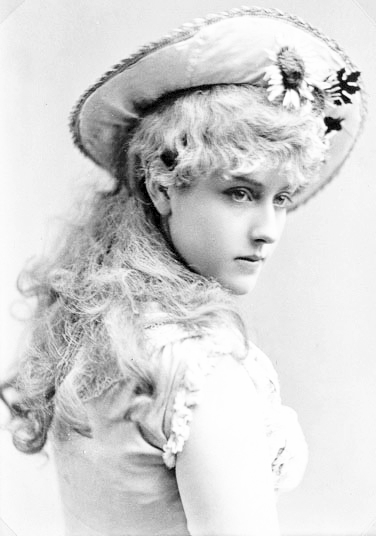
Lillian Russell.
Diamond Jim’s life and career included a number of notable milestones. He invented the modern notion of the expense account, proving that wining, dining and otherwise entertaining prospective clients could sell more railroad equipment than any product demonstrations. His forty-year relationship (mostly platonic) with Lillian Russell, the most celebrated actress of the day, was the longest of her life, outlasting all four of her marriages. And Diamond Jim owned the first automobile in Manhattan.
The vehicle was a custom built electric brougham manufactured by A. H. Woods of Chicago. The automobile arrived accompanied by a mechanic named William Johnson—an African American man who knew how to run it and fix it. Brady immediately hired Johnson away from Woods, dressed him in a bottle-green uniform and gave him the title of chauffeur.
Brady had Johnson drive him around the city on five consecutive mornings between three and four o’clock, when no one was watching, so he could be confident that the automobile would not break down. Then he alerted the press before debuting his horseless carriage in the daylight. On a Saturday afternoon in the spring of 1895, William Johnson in his uniform and Diamond Jim Brady in a top hat, drove down Fifth Avenue to Madison Square. Crowds gathered along the way to view the spectacle and cheer them on. The new machine delighted the spectators, but horses on the road were much less welcoming. When the brougham reached the busy thoroughfare of Forty-Second Street at least five teams of horses bolted in surprise and ran away. After several trips around Madison Square they stopped at the Hoffman House and Diamond Jim went inside and ordered a lemon soda at the bar (he did not drink alcohol.)
The trip had caused so much disruption that the New York City Police Department ordered Brady not to bring the contraption out again during the day. This prohibition was short lived; within a year automobiles powered by gasoline as well as electricity were a common sight in New York City.
Sources:
Burke, John. Duet In Diamonds . New York: G. P. Putnam's Sons , 1972
"We follow vice and folly where a police officer dare not show his head, as the small, but intrepid weasel pursues vermin in paths which the licensed cat or dog cannot enter."
The Sunday Flash 1841