
No. 120
Crime, Eccentricity, and the Sporting Life in 19th Century America.
December 04, 2012

The Diamond King.

J. I. Lighthall, better known as the Diamond King, was a charismatic showman and a master of marketing, but he was also a dedicated healer.
December 4, 2012
...
...

 Welcome to "Weekend Link Dump:  The Musical!"The bombing of LaGuardia Airport.When dead bodies were asked to pick out their murderer.The amulet that could rewrite the history of Christianity.The world's most haunted museum.  That's the boast, at any rate.It may be time to stop insulting the dodo bird.The U.S. Navy and the Soviets compete to find a crashed F-14 jet.15th century
More...
Strange Company - 8/7/2026
  [Editor’s note: Guest writer, Peter Dickson, lives in West Sussex, England and has been working with microfilm copies of The Duncan Campbell Papers from the State Library of NSW, Sydney, Australia. The following are some of his analyses of what he has discovered from reading these papers. Dickson has contributed many transcriptions to the Jamaica […]
More...
Early American Crime - 2/7/2019
"As his son I am proud of hisefforts to succeed in life"Jefferson Randolph Smith IIIArtifact #93-2Jeff Smith collection(Click image to enlarge) oapy's son hires a legal firm to stop the defamation of his father's name. At age 30, Jefferson Randolph Smith III, Soapy and Mary's oldest son, was protecting his father's legacy and his mother's reputation from "libel" and scandal. He was also
More...
Soapy Smith's Soap Box - 10/13/2025
Illustrated Police News, February 8, 1879.O.P. Hull, a well-to-do farmer, lived with his wife and six children near the village of Wassonville, Iowa. Mr. Hull was a kind father and affectionate husband who was adored by his family. He especially doted on his attractive and popular 19-year-old daughter, Emma. Her comfort and happiness were foremost in his mind. He would leave nothing undone
More...
Murder By Gaslight - 8/1/2026
Youth With Executioner by Nuremberg native Albrecht Dürer … although it’s dated to 1493, which was during a period of several years when Dürer worked abroad. November 13 [1617]. Burnt alive here a miller of Manberna, who however was lately … Continue reading
More...
Executed Today - 11/13/2020

Taking a Criminal's Measure. | The Grand Saloon.

The Diamond King.

Wooden Dutchman

A wooden Dutchman, rather than no man at all,
Was what a sensible spinster argued when some practical jokers under took to scare her in Oakland, Cal. [more]


Probably the most pathetic incident since the war occurred in Oakland the other day, and it is still agitating the higher circles of that locality to their inner depths. It appears that on Jackson street resides an old maid—a very old maid—who puts in all the time she can spare from the supervision of other people’s affairs to searching for burglars. In fact, the latter occupation may be said to be her hobby.

For the last twenty-five years Miss Goobey has never retired without first  industriously “shooing” under each and every bed for the purpose of expelling any burglariosly inclined person who might be thus secreted.

The other day a bold, bad man, who happened to be temporarily staying at the Goobey residence, concocted a dreadful practical joke. By the assistance of some of his dissolute companions, he stole a life-sized wooden Dutchman form the front of a cigar store, and placed it under the chaste couch of the mature Diana in question.

The conspirators waited on the landing when Miss Goobey locked the door that night expecting a domestic earthquake to be started as soon as the bogus burglar was sighted.  They waited unsuccessfully for an hour. Was it possible Miss G. had neglected her invariable custom of looking under the bed? No, the idea was preposterous. They still lingered for the volcano to begin, throwing up screams, convulsions, melted lava and hair pins.

Silence.

Another hour passed by.

At last the well-known sound of Miss Goobey’s high soprano snore sounded faintly through the door, and impelled by ungovernable suspense and curiosity, the watchers climbed up and peeped though the transom.

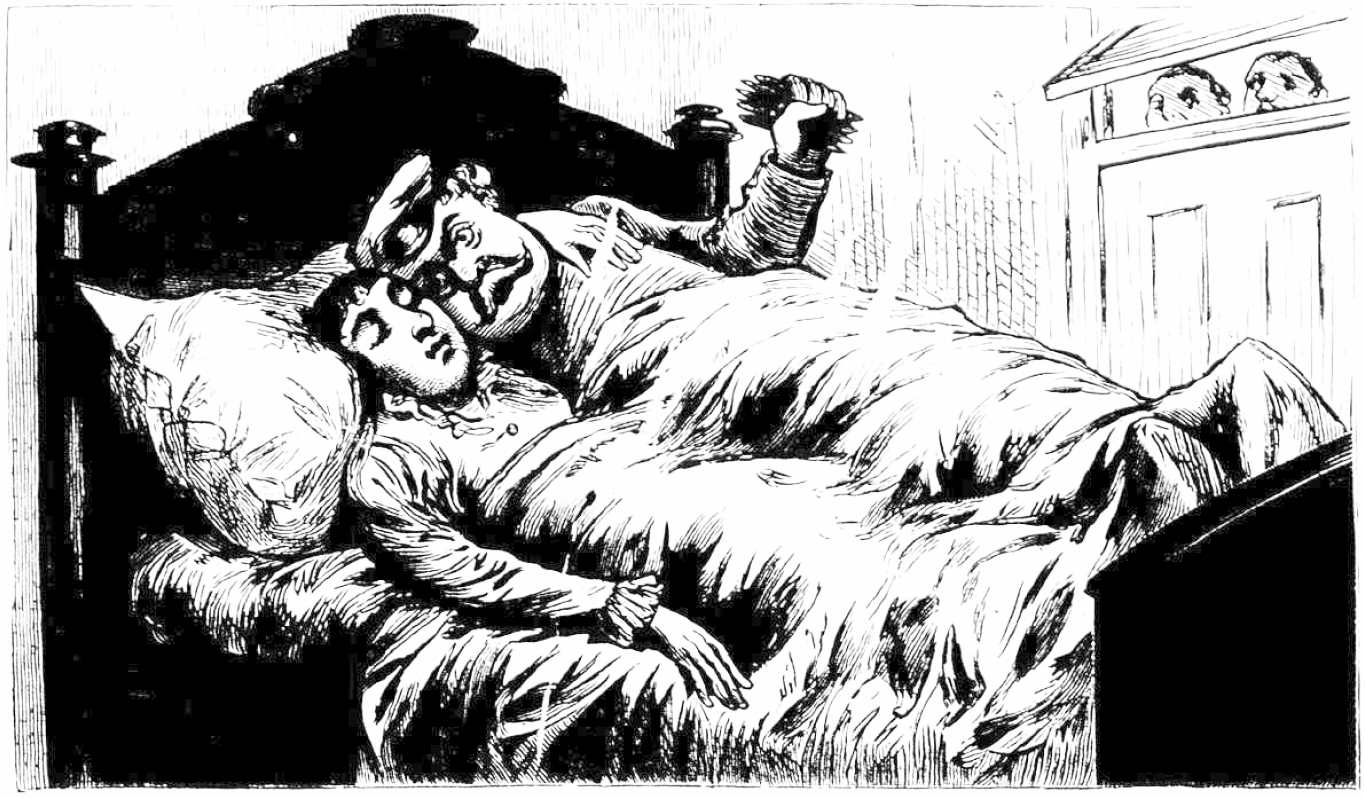
There were two figures in the bed.The wooden man had been carefully lifted into the couch and covered up with its head on Miss G’s off pillow. While one thin arm over his manly red-wood chest, and with one saffron cheek pressed against the irresponsive shoulder, Miss Goobey slept in contented sleep of one who had reached bedrock at last.

She was making believe, poor thing!


Reprinted from National Police Gazette, December 17, 1881.

Diamond Kng

By the end of the nineteenth century, hundreds of self-proclaimed doctors crisscrossed America in traveling medicine shows. Some led elaborate tent shows with dozens of performers using patent medicine sales to finance their productions. Other focused more on the medicine than the show.  J. I. Lighthall, better known as the Diamond King, was a bit of both—he was a charismatic showman and a master of marketing, but he was also a dedicated healer.

Lighthall

J. I. Lighthall was born in Tiskilwa, Illinois in 1856. He claimed to be one-eighth Indian and left home at age eleven bound for the Indian Territory where he learned “Indian Herbal Theory.” Lighthall decided that “what was good for an Indian certainly was good for a white man” and he considered it his duty to share his knowledge with the civilized world.

A natural born showman, J. l. Lighthall soon had one of the most impressive medicine shows in the country. At its height, Lighthall’s show would enter a town with a fabulous procession of cowboys and Indians, singers and other performers, a brass band, wagons pulled by decorated horses, and a brass-trimmed chariot.

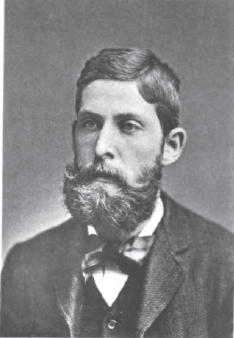
Lighthall was boyishly handsome with long flowing hair. He was known as the Diamond King for the flamboyant diamond studded costumes he wore. Sometimes he would appear in an ankle-length sealskin coat with matching broad-brimmed hat; sometimes in a red velvet suit with buttons made from $5, $10 and $20 gold pieces and a Mexican sombrero trimmed in gold and silver.

As many traveling doctors did, Lighthall advertised painless dentistry, and he would open each show by pulling teeth, free of charge. As the brass band played, Lighthall, with incredible speed, went to work, tossing each extracted tooth high in the air. He claimed his home in Peoria had a walk paved with human teeth.

King-of-pain

The Diamond King’s signature product was called Spanish Oil, The King of Pain, a blood purifier and liver regulator. The tonic, a brown liquid which reportedly smelled like a combination of turpentine and whiskey was made in Peoria by Lighthall’s mother and her third husband Isaac Wright and shipped to the Diamond King’s camp and to drugstores throughout the country. This is how Lighthall described it in verse:

A balm is hidden in the leaf,
That God has given for relief.
The Indians of the Western plains
Have found that they will cure our pains

So now the author does extend
A helping hand, an honest friend.
He’ll cure your aches, relieve your pain
If you will buy his King of Pain.

It’s made of barks, and oils and leaves,
And seldom ever man deceives.
It never fails to satisfy
And on it, friends, you can rely

In 1882, J. I. Lighthall published a book entitled The Indian Household Medicine Guide. In addition to being a comprehensive guide to Lighthall’s brand of herbal healing - including dozens of recipes - the book is a good layman's guide to conventional nineteenth-century medical knowledge. For those with health problems, the book included a list of health-related questions which could be answered and sent to Lighthall’s office. He would send his diagnosis and prescription by return mail.

In January 1886, J. I. Lighthall, twenty-nine years old, died of smallpox while performing in San Antonio, Texas. His passing was noted by newspapers throughout America.


Sources:

  • Fowler, Gene. Mystic healers & medicine shows: blazing trails to wellness in the Old West and beyond. Santa Fe, N.M.: Ancient City Press, 1997.
  • Lighthall, J. I.. The Indian household medicine guide. Peoria, Ill.: [s.n.], 1882.
  • McNamara, Brooks. Step Right Up. Jackson: University Press of Mississippi, 1995.